
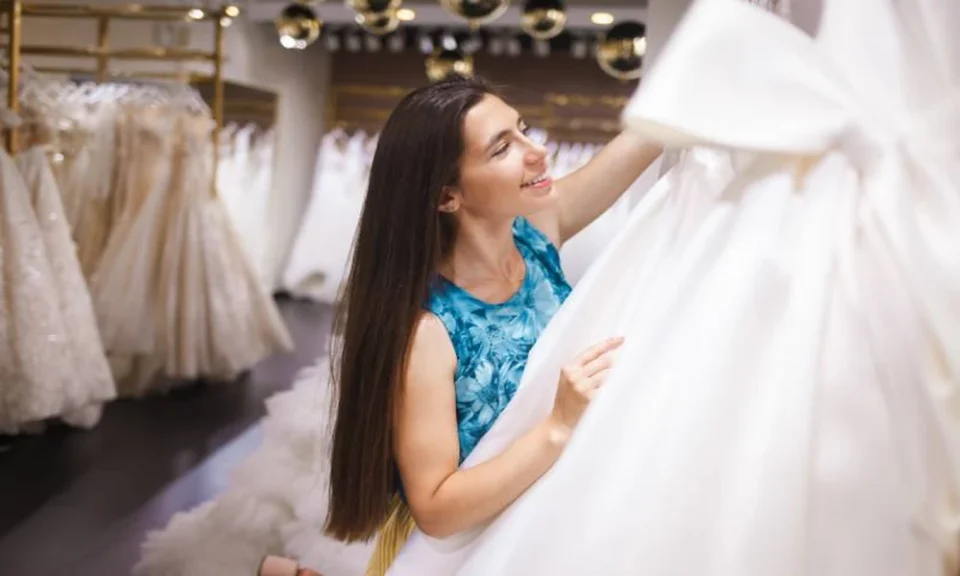
When choosing a wedding dress, many brides focus first on silhouette, neckline, or embellishment. But fabric is just as important. The material of a gown affects how it moves, how it feels, how it photographs, and how formal or relaxed the entire bridal look becomes.
Understanding bridal fabrics can help you shop with more confidence. Once you know the difference between satin, lace, tulle, chiffon, organza, crepe, mikado, and silk, it becomes much easier to choose a dress that suits your venue, season, and personal style.
Satin
Satin is smooth, elegant, and classic. It has a polished surface that gives wedding dresses a refined look. Satin can be used for minimalist gowns, ball gowns, mermaid dresses, and structured A-line silhouettes. It often feels formal and timeless, making it a popular choice for traditional weddings, church ceremonies, and elegant evening receptions.
Because satin has a noticeable finish, it works beautifully with clean designs. Brides who love simple luxury often choose satin gowns with minimal embellishment, structured bodices, or dramatic trains.
Lace
Lace is one of the most romantic bridal fabrics. It can feel vintage, classic, boho, or modern depending on the pattern and placement. Floral lace appliqués, embroidered lace, and illusion lace details are often used on bodices, sleeves, backs, and skirts.
Lace works well for many wedding styles. It can soften a fitted silhouette, add detail to a modest gown, or create a romantic look for garden and outdoor weddings.
Tulle
Tulle is light, airy, and often associated with fairytale bridal style. It is commonly used in A-line gowns, ball gowns, overskirts, and veils. Layers of tulle can create volume without the same heaviness as some structured fabrics.
Tulle is perfect for brides who want a soft, dreamy look. It can be plain and delicate or decorated with lace appliqués, glitter, pearls, or beading.
If you are comparing materials, this bridal fabric guide can help you understand how each fabric affects the final bridal look.
Chiffon
Chiffon is lightweight, flowy, and graceful. It is often chosen for beach weddings, destination ceremonies, summer celebrations, and relaxed outdoor events. Chiffon moves beautifully and gives the gown an effortless feeling.
It is not usually as structured as satin or mikado, so it works best for softer silhouettes such as empire waist, sheath, or flowing A-line dresses.
Organza
Organza is lightweight but more structured than chiffon. It can create volume while still looking airy. Organza is often used for skirts, overlays, sleeves, and dramatic details such as bows or overskirts.
Brides who want a dress that feels light but still has shape may love organza. It is especially beautiful for romantic, fashion-forward, and garden wedding styles.
Crepe
Crepe is smooth, modern, and elegant. It is commonly used for sheath, column, mermaid, and minimalist gowns. Crepe follows the body more closely than many other fabrics, creating a clean and sophisticated silhouette.
This fabric is ideal for brides who want a refined look without heavy embellishment. It pairs beautifully with open backs, long sleeves, square necklines, and dramatic trains.
Mikado and Silk
Mikado is a structured fabric with a luxurious feel. It is excellent for architectural gowns, ball gowns, and modern A-line dresses. Silk is prized for its natural beauty, softness, and elegance, though it can require more delicate care.
The right fabric should support your silhouette, match your venue, and feel comfortable throughout the day. Once you understand fabric, choosing your wedding dress becomes much easier and more intentional.
